
Zion National Park Attractions: Complete 2026 Guide
Introduction
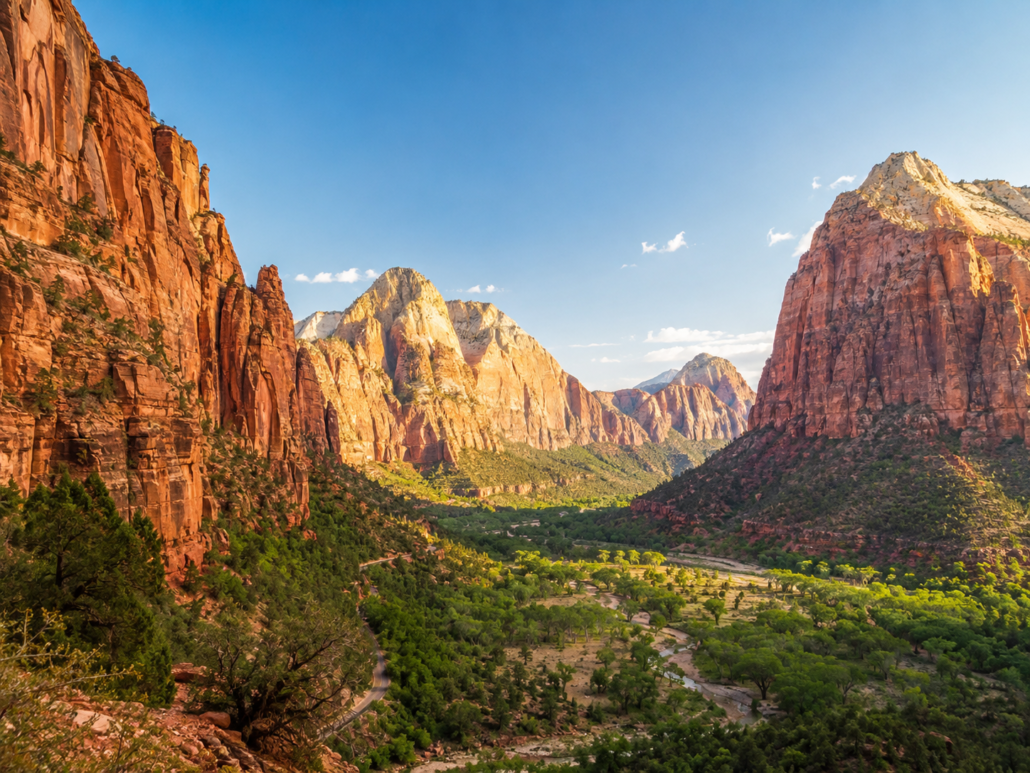
Zion National Park sits in southwestern Utah, carved by the Virgin River into red-and-cream sandstone cliffs that rise over 2,000 feet from the canyon floor. It’s Utah’s most visited national park and one of the most photographed landscapes in the American Southwest it is known for Angels Landing, The Narrows, and a canyon so narrow in places that sunlight only reaches the bottom for a few hours a day.
This is a complete guide about zion national park attractions, not just a list. Beyond the must-see attractions, you’ll find sample itineraries, a safety section for the desert environment, camping options inside the park, activities for non-hikers, and a packing checklist about everything you need to actually build a trip, not just a bucket list.
Quick answer: The must-see Zion attractions are Angels Landing, The Narrows, and the Emerald Pools Trail for hikers; the Zion Canyon Scenic Drive, Zion Canyon Overlook, and Court of the Patriarchs for anyone who wants big views without a strenuous climb; and Kolob Canyons for travelers who want to skip the crowds entirely.
Top Attractions at a Glance
| Attraction | Difficulty | Time Needed | Permit / Reservation? |
|---|---|---|---|
| Angels Landing | Strenuous | 4–5 hours round trip | Yes (lottery permit) |
| The Narrows | Moderate–Strenuous | 3–8 hours (bottom-up) | No for day hike; yes for top-down |
| Emerald Pools Trail | Easy–Moderate | 1–3 hours | No |
| Hidden Canyon | Strenuous | 2–3 hours | No permit, but chain-assisted |
| Riverside Walk | Easy | 1–1.5 hours | No |
| Zion Canyon Overlook | Moderate | 1 hour | No |
| Kolob Canyons | Easy–Moderate | 2–4 hours | No |
| Kolob Arch Viewpoint | Strenuous | Full day (14 mi RT) | No |
| Checkerboard Mesa | Easy (viewpoint) | 15–30 minutes | No |
| Weeping Rock | Easy | 20-30 minutes | No |
| Court of the Patriarchs | Easy (viewpoint) | 15–20 minutes | No |
| Canyon Junction Bridge / Pa’rus Trail | Easy | 1–2 hours | No |
| Zion Human History Museum | Easy | 30–45 minutes | No |
| Watchman Campground | Easy (camping) | N/A | Reservation via Recreation.gov |
Note: This information is current as of July 2026. Trail closures, permit systems, and reservation requirements change frequently, always confirm details on the official NPS Zion website before your visit.
Zion National Park Must-See Attractions
Angels Landing
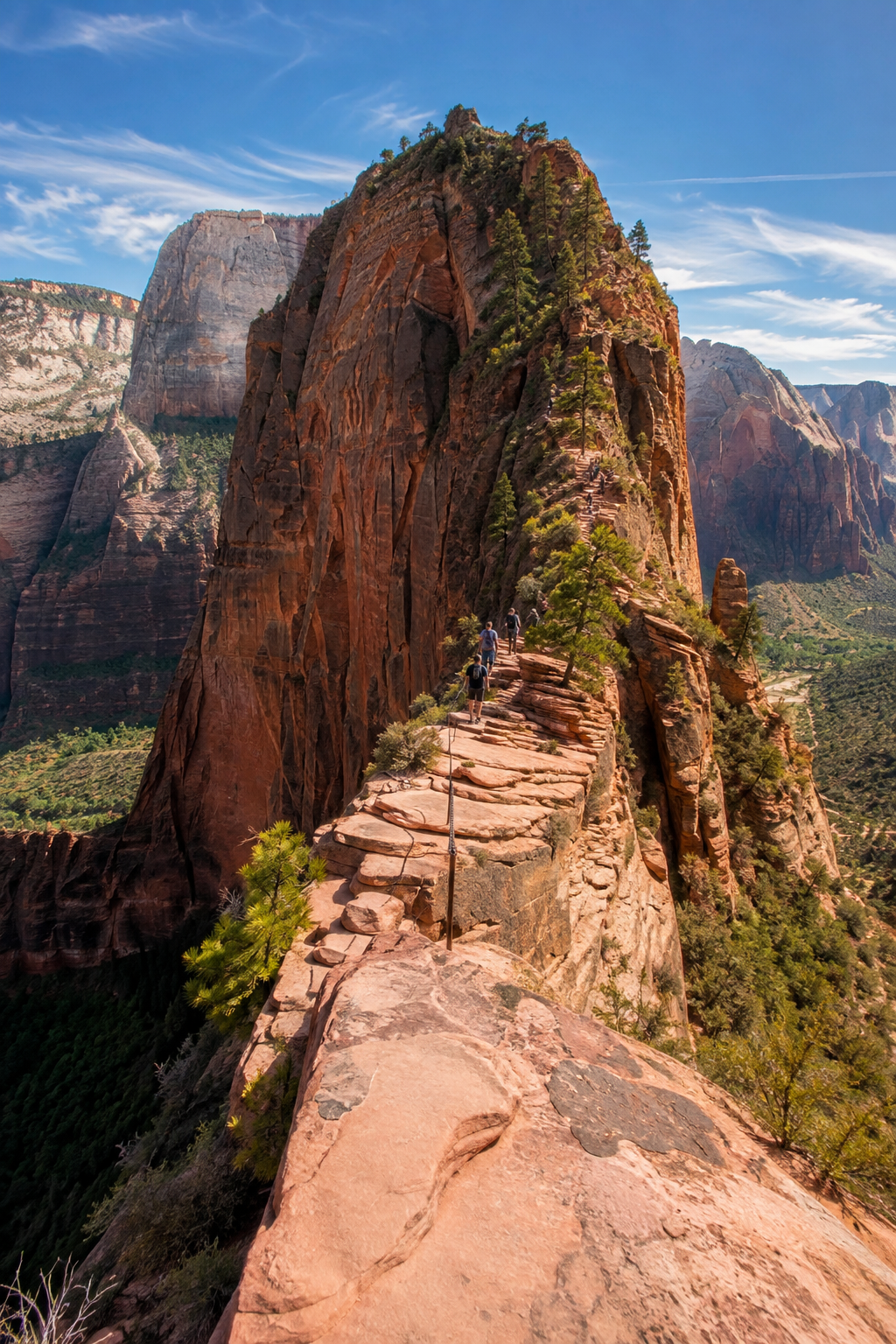
Angels Landing is the park’s signature trail a 5.4-mile round trip climbing 1,488 feet to a razor-thin sandstone fin in the sky, where chains bolted into the rock guide you along the final stretch with 1,000-foot drops on either side. It’s not for everyone. But for those who make it, the reward is a 360° view of Zion Canyon that most visitors never get to see. . Since 2022, Angels Landing requires a permit obtained through a lottery system, a seasonal lottery (apply months in advance) and a day-before lottery (apply the day before your hike). Only permit holders are allowed past Scout Lookout.
Trailhead: The Grotto shuttle stop (Stop 6)
Best time: Early morning for cooler temperatures on the chain sections and fewer people waiting at Scout Lookout
Skip if: You’re afraid of heights, hiking with young children, or didn’t secure a lottery permit
The Narrows
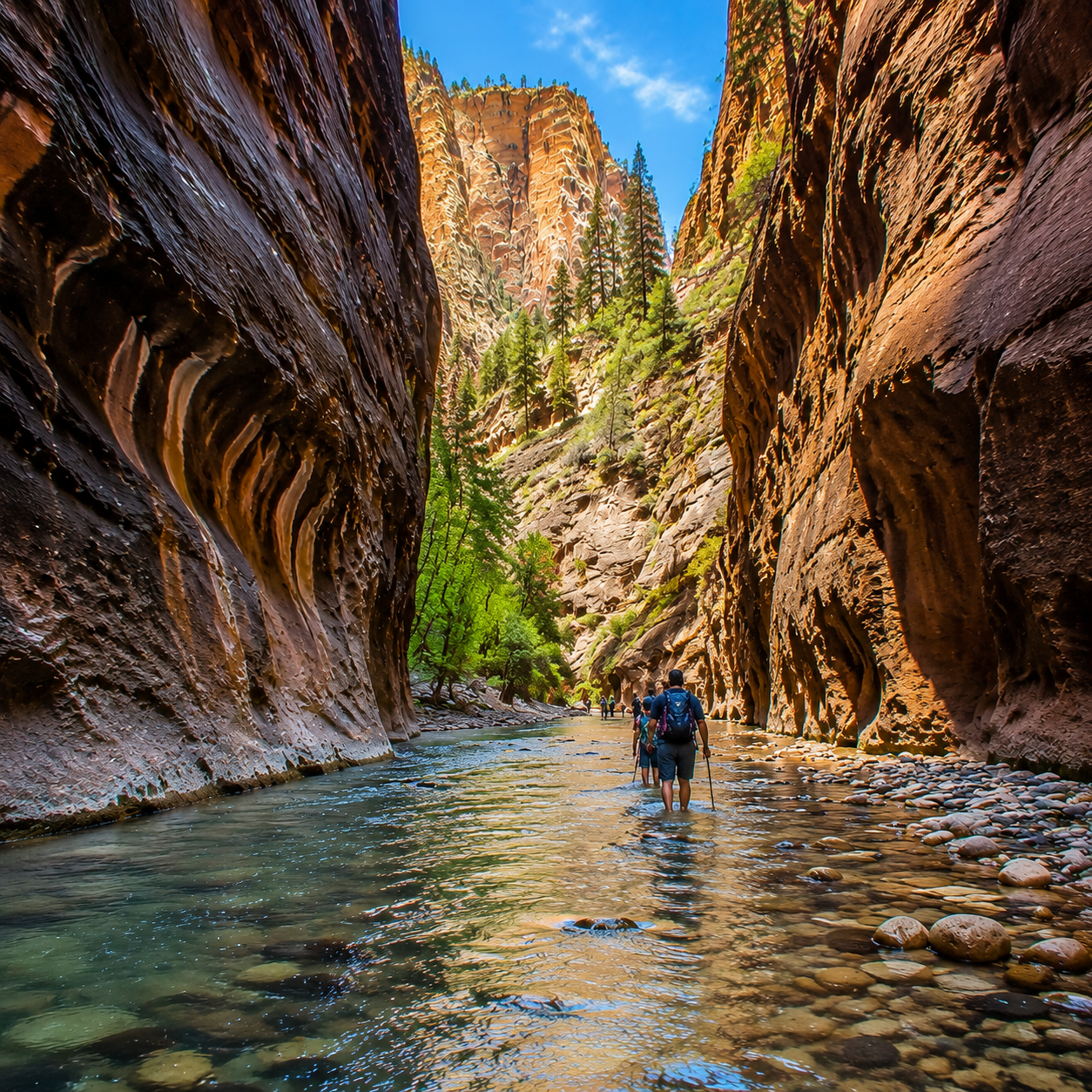
There’s nothing else in Zion quite like this , a hike in the Virgin River, where canyon walls squeeze to as little as 20–30 feet apart and tower 1,000 feet overhead. Most visitors do the bottom-up day hike from the Temple of Sinawava, wading upstream as far as they want before turning back. Water levels and flash flood risk change by season, so check current conditions at the visitor center before you go.
Trailhead: Temple of Sinawava (last shuttle stop), via the paved Riverside Walk
Gear: Water shoes or closed-toe hiking shoes with grip, a walking stick, and a dry suit rental in cooler months
Best time: Fall for lower, warmer water and thinner crowds
Skip if: There’s a flash flood warning in effect, or you don’t have a dry layer during winter/early spring
Emerald Pools Trail
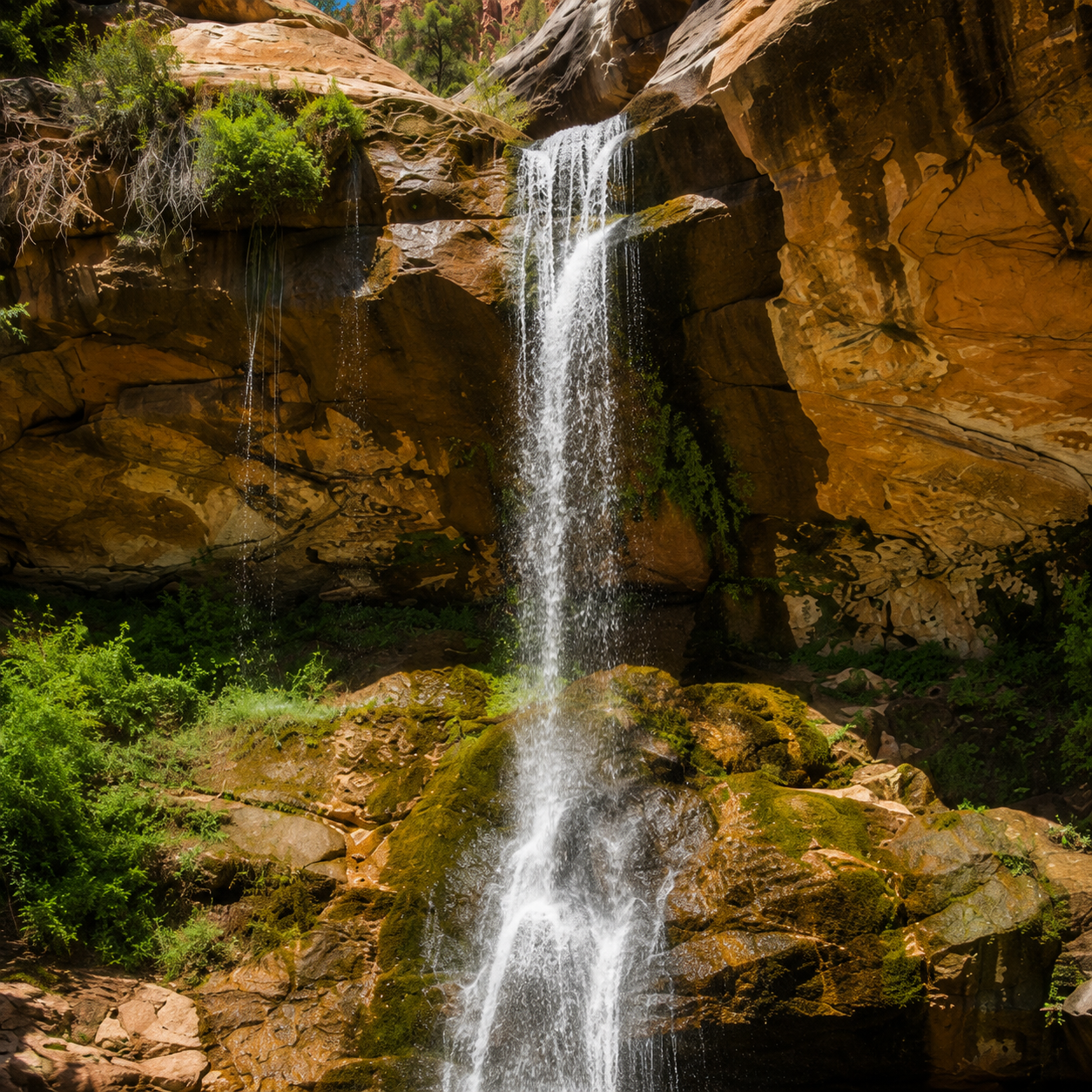
This trail system has three tiers that consist of Lower, Middle, and Upper Emerald Pools which let you choose your own difficulty level. The Lower Pool loop is an easy 1.2-mile round trip suitable for most fitness levels, passing behind a waterfall in wetter months. Continuing to the Upper Pool adds elevation and rougher terrain but rewards you with a quieter, more dramatic pool tucked against sheer cliff walls.
Trailhead: Zion Lodge shuttle stop, or the Grotto stop for the connector route
Best time: Spring, when snowmelt keeps the waterfalls flowing
Skip if: The trail is closed after heavy rain because the surface gets slick and rockfall risk rises
Hidden Canyon
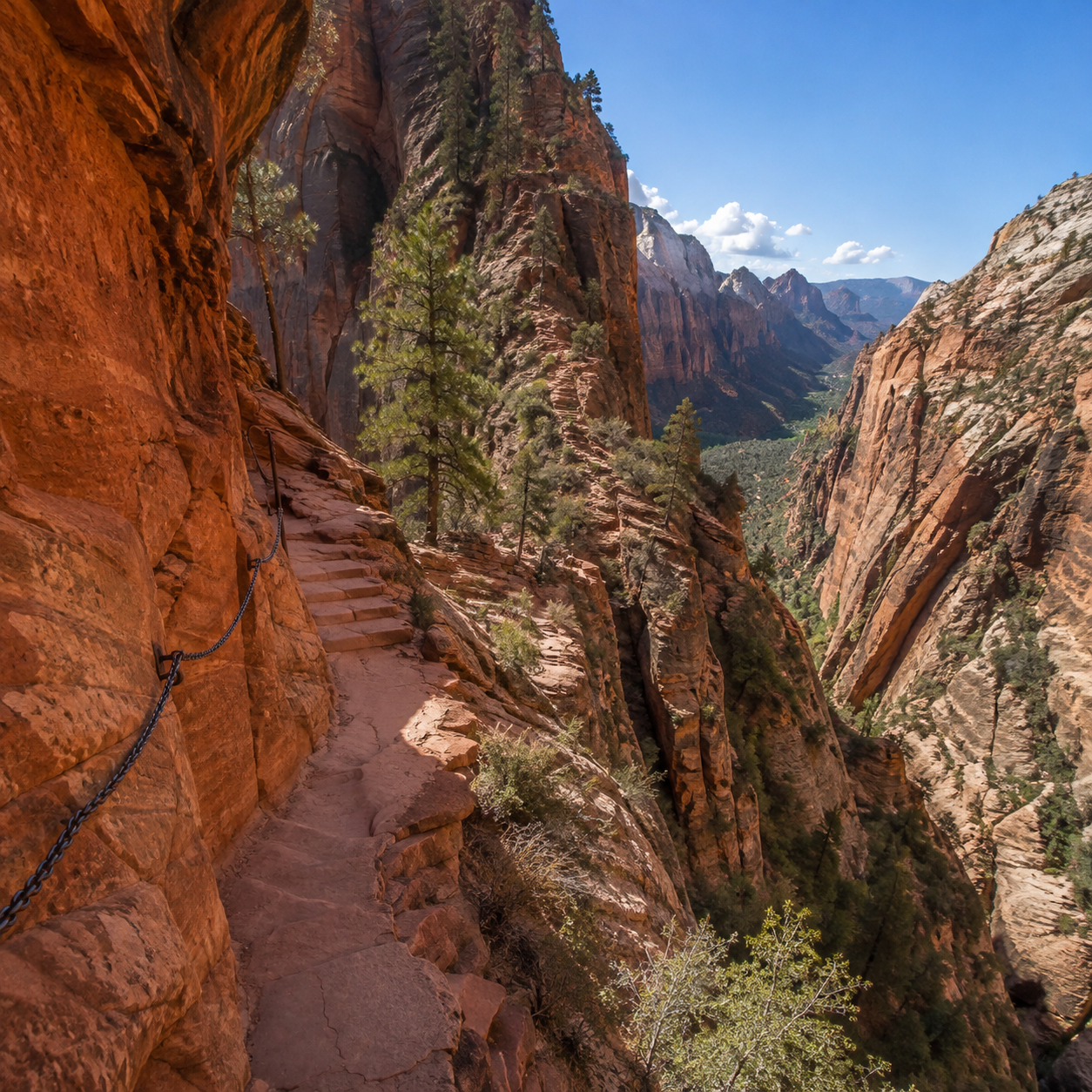
A lesser-known chain-assisted hike similar in character to Angels Landing but shorter and less crowded, Hidden Canyon climbs through a narrow slot with sheer drop-offs before opening into a quiet box canyon. It’s a good alternative for hikers who want the exposure and adventure of Angels Landing without the permit lottery.
Trailhead: Near the Weeping Rock shuttle stop
Distance / gain: About 2.4 miles round trip, roughly 850 feet of elevation gain
Skip if: You’re uncomfortable with exposed chain sections, or the trailhead area (near Weeping Rock) has restricted access to some connecting trails, check current status first
Riverside Walk
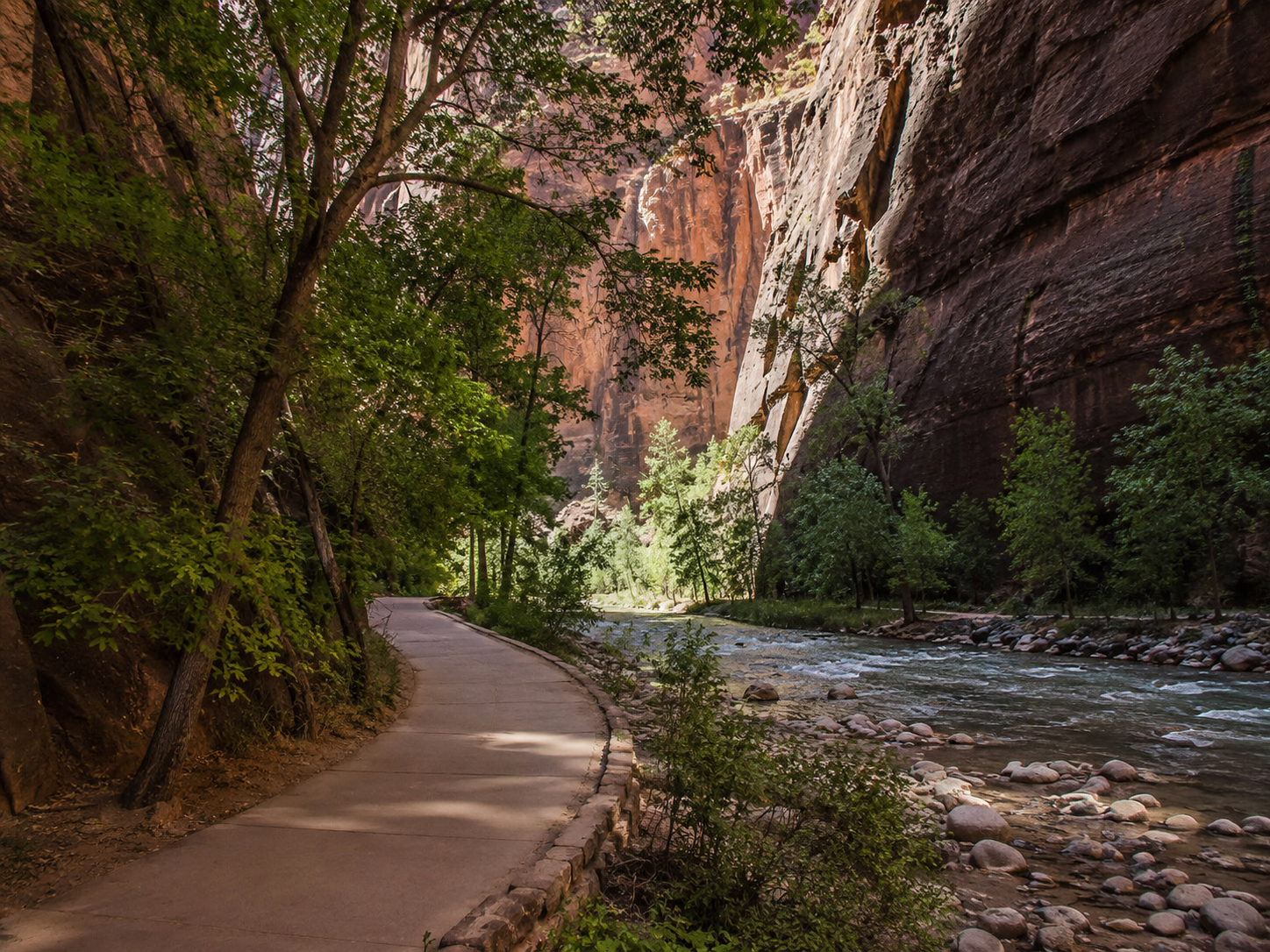
An easy, paved 2.2-mile round-trip path along the Virgin River from the Temple of Sinawava, Riverside Walk is stroller- and wheelchair-accessible and doubles as the approach trail to The Narrows. It’s one of the best low-effort ways to experience the canyon’s scale up close.
Trailhead: Temple of Sinawava (last shuttle stop, Stop 9)
Best time: Late afternoon, when the canyon walls catch warm light
Skip if: Icy sections are present in winter, or you need a fully flat surface, parts are irregular pavement with minor drop-offs
Zion Canyon Overlook
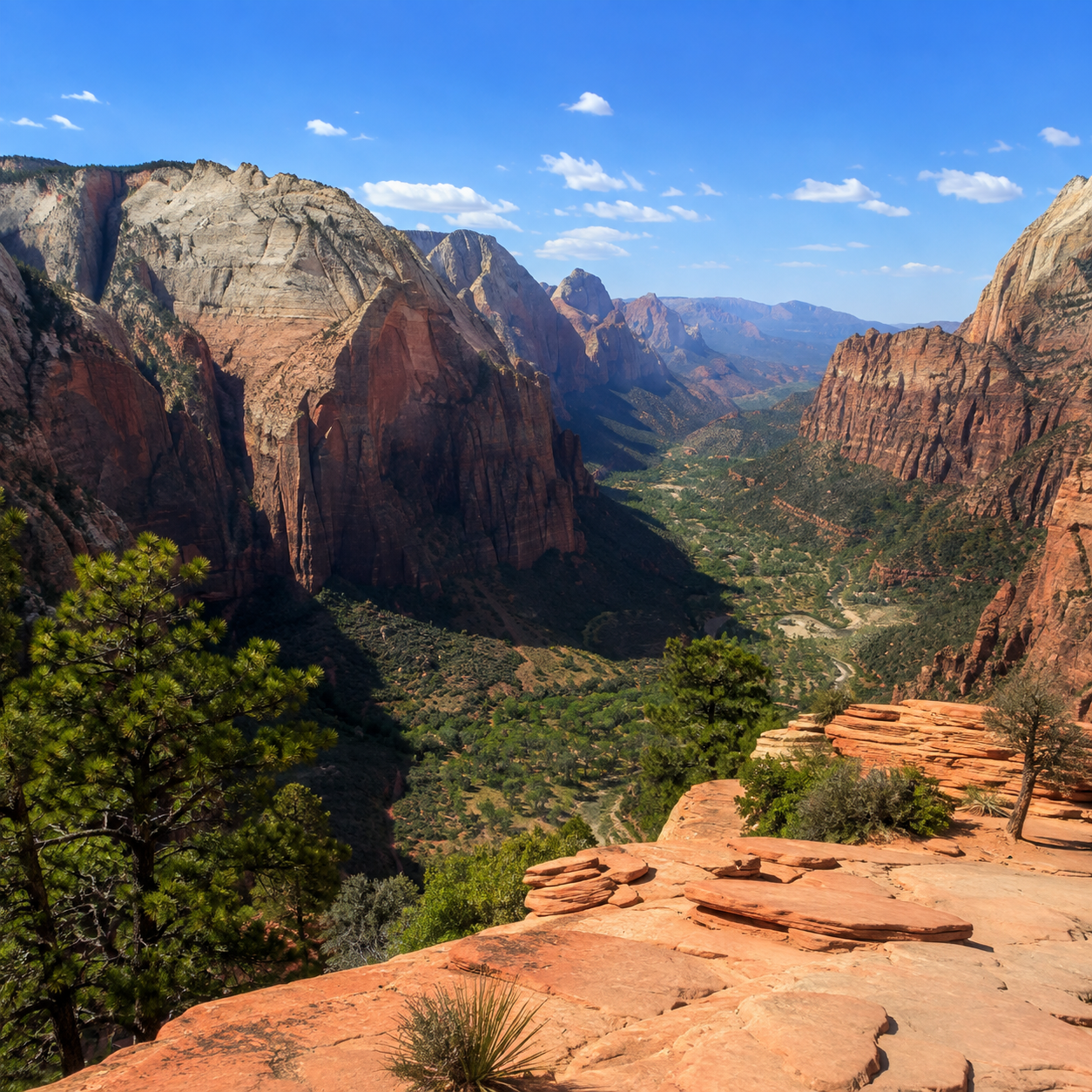
A short but steep half-mile trail near the east entrance tunnel, Zion Canyon Overlook delivers one of the park’s best panoramic views for a fraction of the effort of Angels Landing. Plan about an hour round trip, including time at the top.
Trailhead: Small pullout on the east side of the Zion–Mt. Carmel Tunnel
Best time: Sunset for the overlook faces west across the canyon
Skip if: You’re uneasy near unfenced cliff edges; there are no chains or rails at the top
Kolob Canyons (and Kolob Arch)
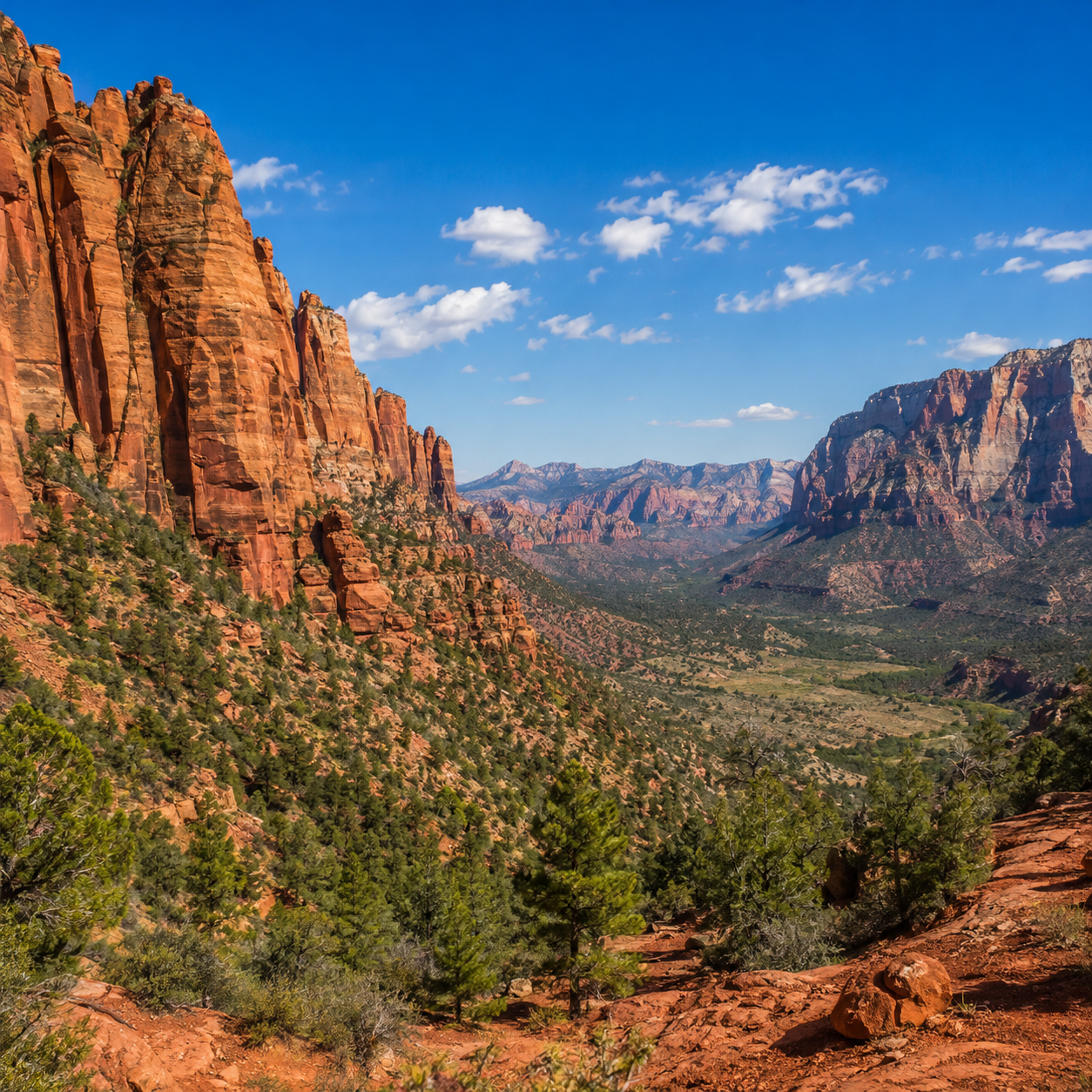
Tucked in the park’s northwest corner, Kolob Canyons is a separate entrance with its own scenic drive and trails and dramatically smaller crowds than the main canyon. The 5-mile scenic drive alone is worth the detour, and the Timber Creek Overlook Trail (a short, easy hike) offers sweeping views of the Finger Canyons. Ambitious hikers can continue to Kolob Arch, among the largest freestanding arches in the world (measured in 2006 at 287 feet, the sixth-longest known), reached via a strenuous 14-mile round-trip trail along La Verkin Creek with realistically a full-day or overnight trip.
Trailhead: Kolob Canyons Visitor Center, off I-15 (separate entrance from the main canyon)
Best time: Fall, for foliage color along Taylor Creek
Skip if: You’re short on time, Kolob Arch is a serious backcountry commitment, not a quick add-on
Checkerboard Mesa
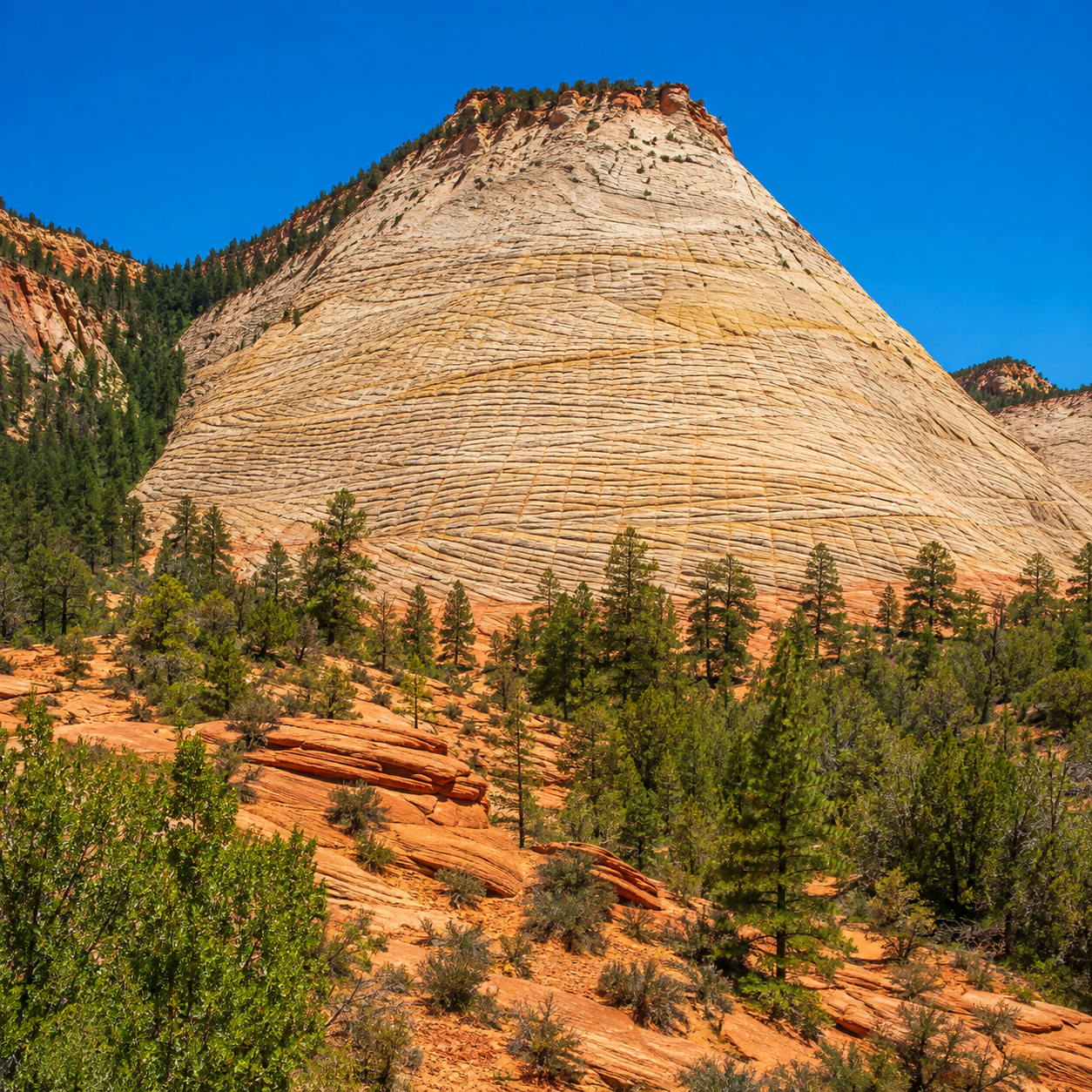
Visible right from the road near the east entrance, Checkerboard Mesa is a sandstone formation with a distinctive cross-hatched pattern caused by weathering and erosion along two intersecting fracture systems. No hike required to pull off and view it from a designated overlook.
Best time: Midday, when direct overhead sun makes the cross-hatch pattern most visible
Trailhead: Roadside pullout/viewpoint near the east entrance (no trailhead and viewed from the road)
Skip if: You’re looking for a maintained trail because there isn’t one to the formation itself, just the roadside overlook
Weeping Rock
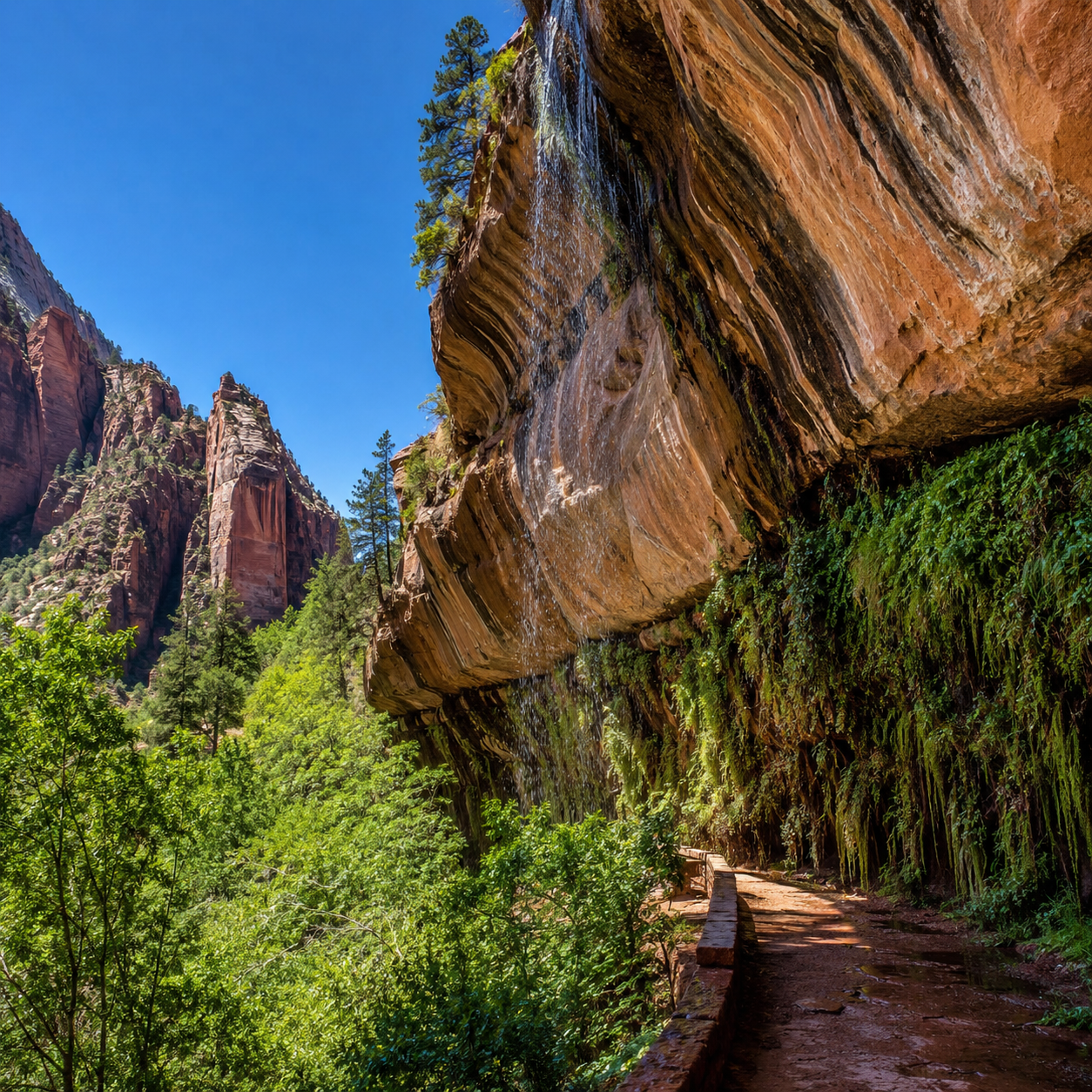
Weeping Rock reopened on September 5, 2025, after nearly two years of closure following a November 2023 rockfall. The short, steep 0.4-mile trail leads to a dripping alcove and hanging garden. Note that Hidden Canyon and the East Rim Trail to Observation Point both reached from the same trailhead area remain closed. Check the official NPS Zion alerts page for current status.
Trailhead: Weeping Rock shuttle stop (Stop 7)
Best time: Morning, before the alcove area gets crowded and while temperatures are cooler
Skip if: You need a longer hike because this is a short, steep out-and-back to a dripping alcove, not a full trail experience
Court of the Patriarchs
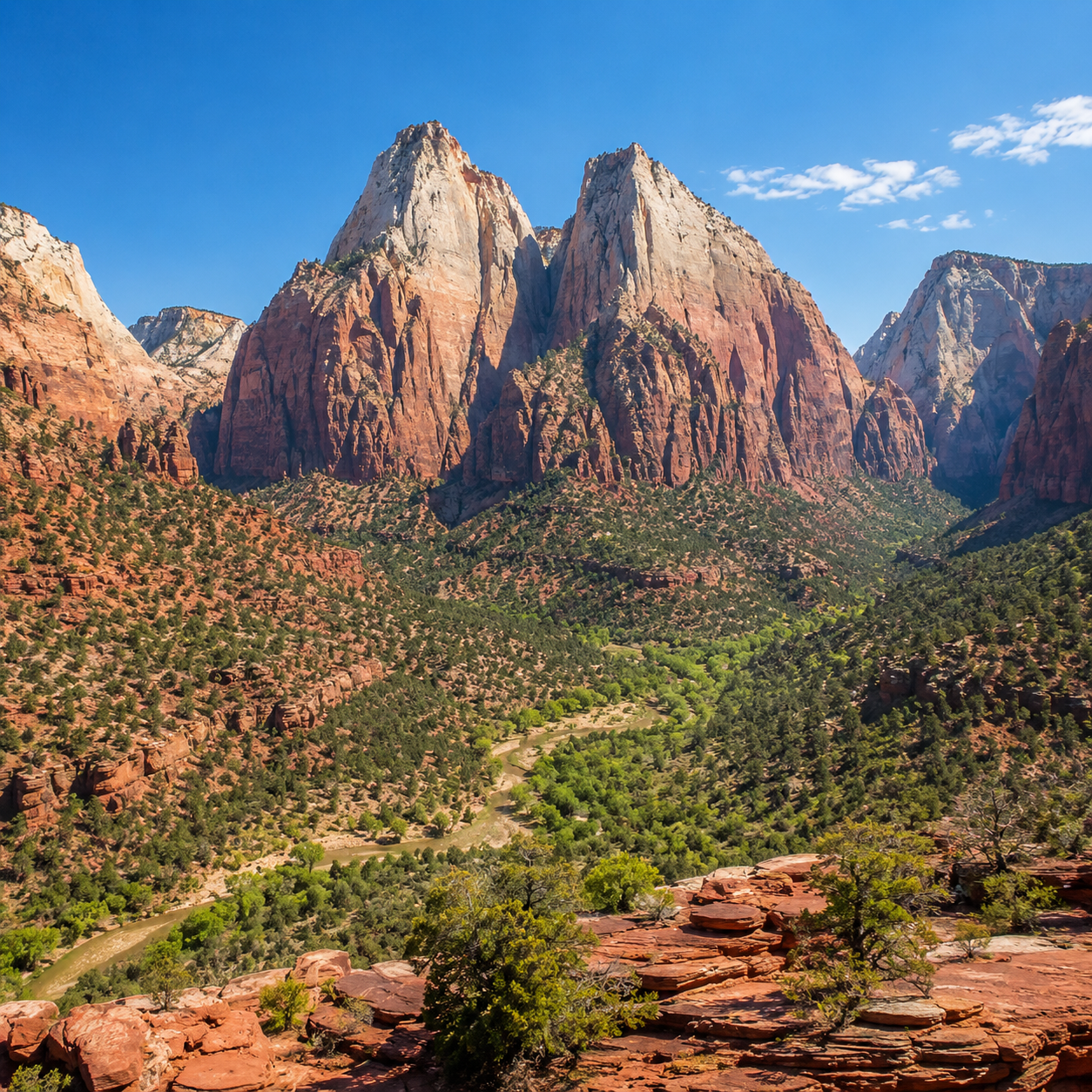
A quick roadside viewpoint named for three peaks that consist of Abraham, Isaac, and Jacob .Court of the Patriarchs requires only a short walk from the shuttle stop to a viewing platform. It’s an easy add-on for anyone touring the canyon by shuttle.
Trailhead: Court of the Patriarchs shuttle stop (Stop 4)
Best time: Morning, when direct sunlight hits the peaks (Abraham, Isaac, and Jacob) for the clearest photos
Skip if: You want a closer look at the peaks, for that cross to the separate Sand Bench Trail instead
Canyon Junction Bridge / Pa’rus Trail
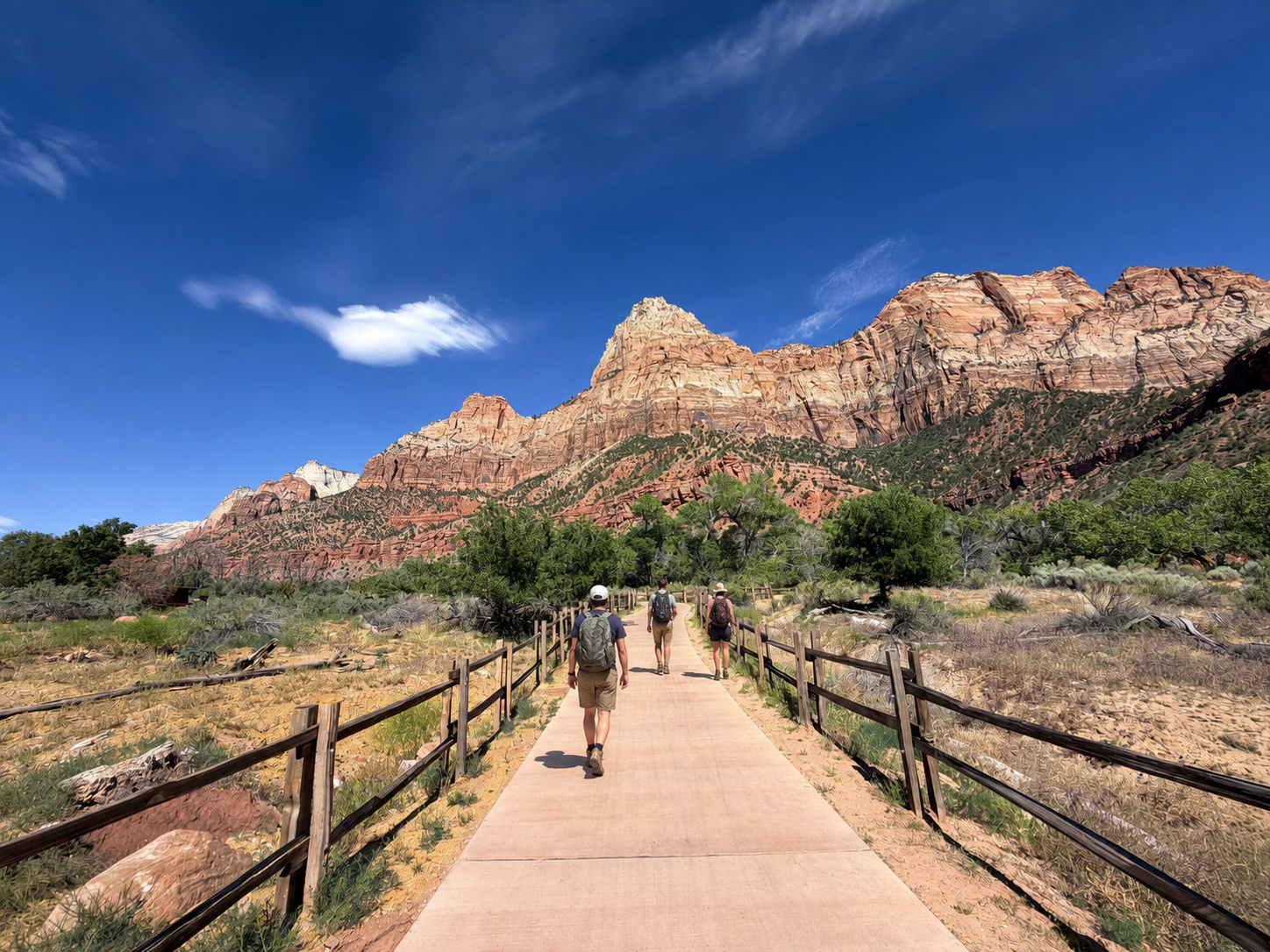
The Pa’rus Trail is Zion’s only pet-friendly and bike-friendly trail, a paved 3.5-mile round trip along the Virgin River connecting the visitor center to Canyon Junction. It’s flat, wheelchair-accessible, and a good option for families or anyone wanting a relaxed morning or evening walk with canyon views.
Trailhead: Zion Canyon Visitor Center
Best time: Sunset, especially at the Canyon Junction Bridge, it’s apopular photo spot with The Watchman lit up in the background
Skip if: You’re looking for shade because the trail is exposed along most of its length
Zion Human History Museum
Located near the visitor center, the Zion Human History Museum covers thousands of years of the park’s natural and cultural history through exhibits and a short film, and its terrace has one of the easiest, best canyon views in the park. Good option for a midday break from hiking or a bad-weather backup plan.
Trailhead: Zion Human History Museum shuttle stop (Stop 2)
Best time: Midday, as a break from hiking, or during a bad-weather stretch when outdoor plans aren’t practical
Skip if: You’re visiting outside the museum’s operating season (it opens seasonally, roughly spring through fall) so you have to check hours before planning around it
Camping Inside Zion
If you want more time in the canyon than a day trip allows, three campgrounds sit inside or near the park boundary.
Watchman Campground: Near the south entrance and visitor center, walkable to the shuttle and into Springdale. Reservable in advance via Recreation.gov for the most convenient and most competitive option.
South Campground: Adjacent to Watchman, open seasonally (roughly spring through fall) and reservable via Recreation.gov. Has been affected by rehabilitation work in recent years, check current status and availability before planning around it.
Lava Point Campground: A primitive, high-elevation campground off Kolob Terrace Road with no water source, best for travelers who want solitude and don’t mind roughing it.
Activities for Every Traveler (Not Just Hikers)
Zion rewards effort, but you don’t have to hike to have a full trip. These are the best low-impact or non-hiking ways to experience the park.
- Biking :The Pa’rus Trail and Zion Canyon Scenic Drive are both open to bikes, including during shuttle season, making this one of the few ways to cover the main canyon at your own pace without walking or waiting for a shuttle.
- Stargazing : Zion is a designated International Dark Sky Park. Pull off along the scenic drive well away from Springdale’s lights for the clearest views of the Milky Way.
- River wading : Shallow, calm sections of the Virgin River near Canyon Junction are a good low-key way for families with young kids to cool off without committing to a full Narrows hike.
- Horseback riding : Guided rides are available through the park’s authorized concessioner near Zion Lodge for visitors who want trail views without the climb.
- Wellness stops : Geothermal hot springs pools exist near the park (outside Zion’s boundary) and are a popular add-on for soothing tired muscles after a big hiking day,worth booking ahead in peak season.
Staying Safe in Zion’s Desert Environment
Zion’s terrain and climate are more demanding than they look from the trailhead. A few precautions cover most of the real risk.
Flash floods
Canyoneering routes and The Narrows are especially vulnerable to flash floods, which can arrive with little warning even on a sunny day if a storm is dropping rain miles upstream. Check the flood forecast at the visitor center or the NPS app before entering any slot canyon, and know your nearest high ground. Warning signs include a sudden rise or color change in the water, floating debris, and distant thunder.
Heat and hydration
Summer temperatures regularly exceed 100°F on canyon floor trails with little shade. Start strenuous hikes at sunrise, carry roughly one liter of water per hour of hiking, and pace yourself because heat exhaustion is the most common reason for search-and-rescue calls in the park.
Wildlife
Rattlesnakes and other desert wildlife are present, particularly in warmer months. Stay on marked trails, don’t reach into rock crevices, and never approach or feed animals, store food securely at campgrounds.
Cliff edges
Many of Zion’s best viewpoints, including Angels Landing, Zion Canyon Overlook, and Hidden Canyon, have long unfenced drop-offs. Supervise children closely near edges, and resist stepping past posted barriers for a photo because falls are the leading cause of serious injury in the park.
Sample Itineraries
Zion in One Day
- Morning: Catch an early shuttle to Temple of Sinawava and hike The Narrows for 2–3 hours (turn back before Wall Street if time is tight).
- Midday: Lunch in Springdale or at Zion Lodge, then ride the shuttle to the Grotto stop.
- Afternoon: Hike the Lower Emerald Pool loop or the Zion Canyon Overlook trail near the east entrance.
- Evening: Drive (or shuttle) the length of the canyon for sunset light on the cliffs, or stop at the Human History Museum terrace if you need a low-effort finish.
Zion in Two Days
Day 1: Angels Landing (if you have a permit) in the morning while it’s cool, then Riverside Walk in the late afternoon as a low-effort cooldown.
Day 2: The Narrows in the morning, the Pa’rus Trail or Zion Human History Museum midday, and Court of the Patriarchs or Checkerboard Mesa as quick sunset stops on your way out.
Zion in Three Days
Follow the two-day plan above, then dedicate day three to Kolob Canyons, the separate northwest entrance, its 5-mile scenic drive, and the Timber Creek Overlook Trail. It’s a worthwhile add-on precisely because almost no one on a one- or two-day trip makes it out there.
Attractions by Traveler Type
Families with young kids: Riverside Walk, Pa’rus Trail, river wading near Canyon Junction, Court of the Patriarchs, Zion Human History Museum
Easy / low-effort: Riverside Walk, Pa’rus Trail, Court of the Patriarchs, Checkerboard Mesa, Zion Human History Museum, Lower Emerald Pool
Moderate hikers: Zion Canyon Overlook, Upper Emerald Pools, The Narrows (bottom-up, shorter distance), Kolob Canyons trails
Thrill-seekers / strenuous: Angels Landing (permit), Hidden Canyon, The Narrows top-down route (permit), Kolob Arch
Photographers: Zion Canyon Overlook and Checkerboard Mesa (best light varies by time of day), stargazing pull-offs on the scenic drive
Mobility-limited visitors: Riverside Walk, Pa’rus Trail, Zion Human History Museum terrace it’s all paved with minimal walking. The shuttle itself is wheelchair-accessible, so the length of the canyon is reachable even during the months when private vehicles aren’t allowed on the Scenic Drive
Read Also: Zion or Bryce Canyon? Discover Which National Park Matches Your Travel Style
Getting Around: Shuttle System
The main canyon is closed to private vehicles for most of the year so the free Zion Canyon Shuttle is the only way to reach most trailheads, including Angels Landing, The Narrows, and the Emerald Pools. Shuttles typically run from early spring through late fall; check current-year dates before you go, since they shift annually. The shuttle is free and doesn’t require a ticket or reservation and you can just line up at a stop. Lines can be long on peak-season mornings, so arrive early or walk part of the route (e.g., the Pa’rus Trail to the Human History Museum stop) to skip the worst of it.
Parking at the Zion Canyon Visitor Center fills by mid-morning during peak months (March–October), so arrive before 8 a.m. or park in the town of Springdale and walk in. Kolob Canyons has its own separate scenic drive that’s open to private vehicles year-round.
Pro tip: Ride the shuttle to the last stop, Temple of Sinawava, first, then work your way back down the canyon. Return trips toward the visitor center are typically less crowded than the outbound ride.
Best Time to Visit Each Attraction
- Spring (March–May): Waterfalls are strongest in the Emerald Pools; Narrows water levels can still be high and cold from snowmelt.
- Summer (June–August): Peak crowds and heat (often 100°F+); start hikes at sunrise, and check flash flood forecasts before entering The Narrows.
- Fall (September–November): Best overall balance of mild temperatures, lower water levels in The Narrows, and thinning crowds.
- Winter (December–February): Coldest but least crowded; some trails may have icy sections, and a dry suit is recommended for The Narrows.
Where to Stay & Eat Nearby
Springdale, Utah sits directly at Zion’s south entrance and is the most convenient base because many hotels are within walking distance of the shuttle system, so you can skip driving entirely. It has a range of restaurants, gear shops for last-minute Narrows rentals, and lodging from budget motels to upscale resorts. Nearby Hurricane and St. George offer cheaper lodging with a 30–45 minute drive to the park entrance.
If Springdale is booked or over budget, Hurricane and St. George generally run cheaper, and Kolob Canyons visitors can also base out of Cedar City to the north. Rates shift a lot by season, so compare current listings rather than relying on fixed price ranges, peak-season weekends in Springdale book out months in advance.
What to Pack
- Closed-toe water shoes or old sneakers with grip, for The Narrows
- A refillable water reservoir or bottles, plan on roughly one liter per hour of hiking in warm months
- A walking stick or trekking pole for river hiking
- Quick-dry layers, and a dry suit rental in cooler months for The Narrows
- Sun protection: hat, sunglasses, sunscreen because shade is limited on most canyon-floor trails
- A headlamp if you’re doing a pre-dawn start for Angels Landing
- A downloaded offline map or the NPS app, since cell service is unreliable in the canyon
Conclusion
Zion is really two parks in one: the adrenaline side that consists of Angels Landing’s chains, The Narrows’ current, Hidden Canyon’s exposure and the accessible side that consists of Riverside Walk, the Pa’rus Trail, the Human History Museum terrace that is flat, paved, and just as scenic. Most visitors do some of both, and that’s the right call.
At the end of the day, Zion is a great adventure and one of the few places where a single day can take you from wading a river canyon to standing on a narrow sandstone fin with a 1,000-foot drop on either side. However you experience it, it’s worth the trip.
Book your adventure today and get ready to explore the wonders of Zion National Park
FAQs
Do you need a permit for Angels Landing?
Yes. Since 2022, hiking past Scout Lookout to Angels Landing requires a permit obtained through the National Park Service lottery system, which has a seasonal advance lottery and a day-before lottery.
Is Zion good for a one-day visit?
Yes, one day is enough to hit the highlights that consist of the Zion Canyon Scenic Drive, a shorter Narrows hike, and one or two overlook trails, but you won’t have time for Angels Landing plus a full Narrows hike in the same day.
Which Zion hike is best for beginners?
Riverside Walk and the Pa’rus Trail are the best beginner options because both are flat, paved, and under 2.5 miles round trip with strong canyon views.
Can you see Zion without hiking?
Yes. The Zion Canyon Scenic Drive, Zion Canyon Overlook parking area, Checkerboard Mesa, and Court of the Patriarchs viewpoint all offer major views with little to no walking required.
What not to miss in Zion National Park?
Angels Landing (if you get a permit), The Narrows, and the Zion Canyon Scenic Drive are the three experiences most visitors rank as unmissable, between them they cover the park’s best hiking, its signature river canyon, and its easiest big-view drive.
What is Zion famous for?
Zion is best known for its towering sandstone cliffs carved by the Virgin River, the Angels Landing hike, and The Narrows , it’s a hike that takes place directly in a river canyon narrow enough to touch both walls in places.
What are the special features of Zion National Park?
Zion’s defining features are its slot-canyon narrows, sheer sandstone cliffs over 2,000 feet tall, a free in-park shuttle system that replaces private vehicles in the main canyon, and a distinct second section (Kolob Canyons) with its own entrance and far fewer visitors.
Is 2 days enough in Zion?
Two days is enough to cover the main canyon well including Angels Landing (with a permit) on one day and The Narrows plus a couple of overlook trails on the other, though a third day helps if you want to add Kolob Canyons.
Is The Narrows or Angels Landing more dangerous?
They carry different risks. Angels Landing’s danger is exposure of unfenced 1,000-foot drop-offs along the chain sections. The Narrows’ main risk is flash flooding and cold-water exposure, which is why checking the flood forecast before entering matters more there than trail difficulty does.
Where can you camp in Zion National Park?
Watchman Campground, near the south entrance, is the most convenient option and requires an advance reservation through Recreation.gov. South Campground sits nearby and is also reservable via Recreation.gov, while Lava Point Campground offers a more primitive, high-elevation, reservation-only option off Kolob Terrace Road.


Leave a Reply
Want to join the discussion?Feel free to contribute!